
Click here for the full script of 'Fast Times at Morality High!'
The Castle of Perseverance is a 15th century morality play and the earliest known full-length vernacular play in existence. In the play, the struggle between the forces of good and evil is portrayed by the fall and eventual salvation of man. These forces are portrayed through moral personifications, such as the seven Deadly Sins and the seven Cardinal Virtues, which struggle against one another in an attempt to gain control over Man’s soul.

In this respect, The Castle of Perseverance typifies morality plays in that it is a play enforcing a moral truth or lesson by means of personified abstractions—figures representing vices and virtues and qualities of the human mind. Two additional themes in the play, as in most morality plays, are the coming of Death to Mankind and the debate of what becomes of the body and soul upon death.
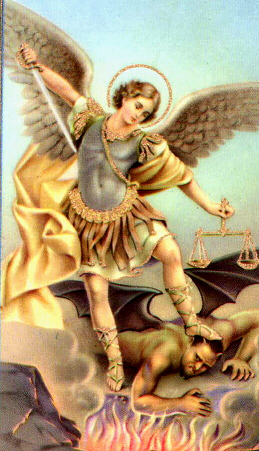
Although Mankind falls back into the graces of God by the play’s conclusion, it is clear to the audience that evil forces of all kinds are both persuasive and persistent.
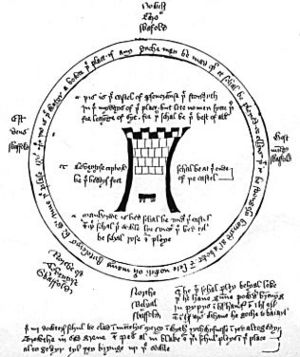
The play was typically performed on a round theatre, as indicated by the included stage map:
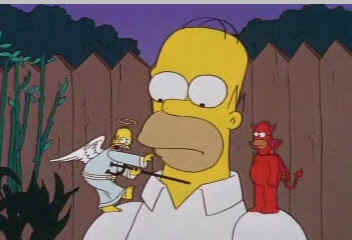
The Castle of Perseverance has also been portrayed through several popular mediums in recent years, including an episode of The Simpons during which Homer Simpson portrays 'Mankind,' persuaded by both the Devil and an angel.
The play also survives in a unique manuscript from approximately 1440, which is presently housed in the Folger Shakespeare Library in Washington, D.C.